

Smitten, Fo-what?
On faux bois, a Federal-era folk art technique, and the joy of falling for something new.

I spotted a chest on an auction site described as “Federal polychrome grain-painted,” and I loved it! But wait… what does all that mean?
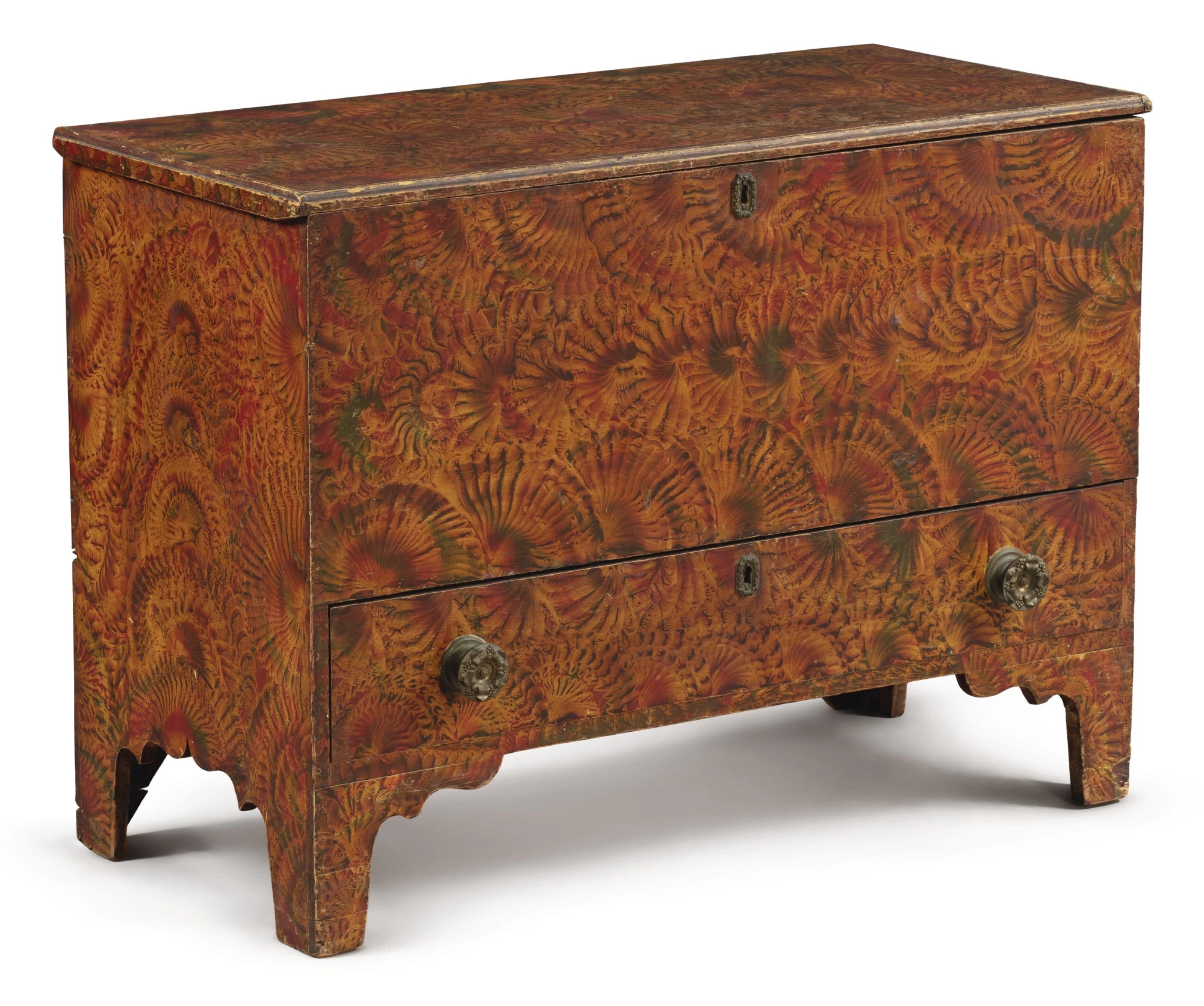
To unpack that, as I understand it, “grain painting” or “graining” is another term for “faux bois.” Faux bois comes from the French and translates to “false wood.” It refers to imitating wood grain with paint, and on flat surfaces it draws on the Renaissance tradition of trompe-l’œil, meaning “to fool the eye.” Some call the flat style “graining,” but I’ve always heard faux bois used for both 2D and 3D.
It’s a technique I’ve loved for a long time. Years ago, I created these fantastical stuffed-animal heads and mounted them on simple cut MDF plaques, which I painted faux bois in a loose, brushstroke style. A few years earlier, I worked for a decorative painting company, using specialty tools to achieve a wood-grain effect, mostly on kitchen cabinets. What I love about the technique is that nearly any colorway works, from hot pink to shades of blue. Even a loose interpretation of the grain reads as wood when you step back.


So when I landed on that chest, I had some experience with faux bois, but “federal polychrome grain-painted” was entirely new to me.
Polychrome, derived from the Greek for “many-colored,” is the practice of decorating objects with multiple colors. Polychrome grain-paint decoration is a distinctly American folk art technique from the Federal period (roughly 1780 to 1820). Artisans used affordable local woods, such as pine or poplar, and painted them with multicolored finishes to mimic costly veneers — mahogany, rosewood, and bird’s-eye maple.
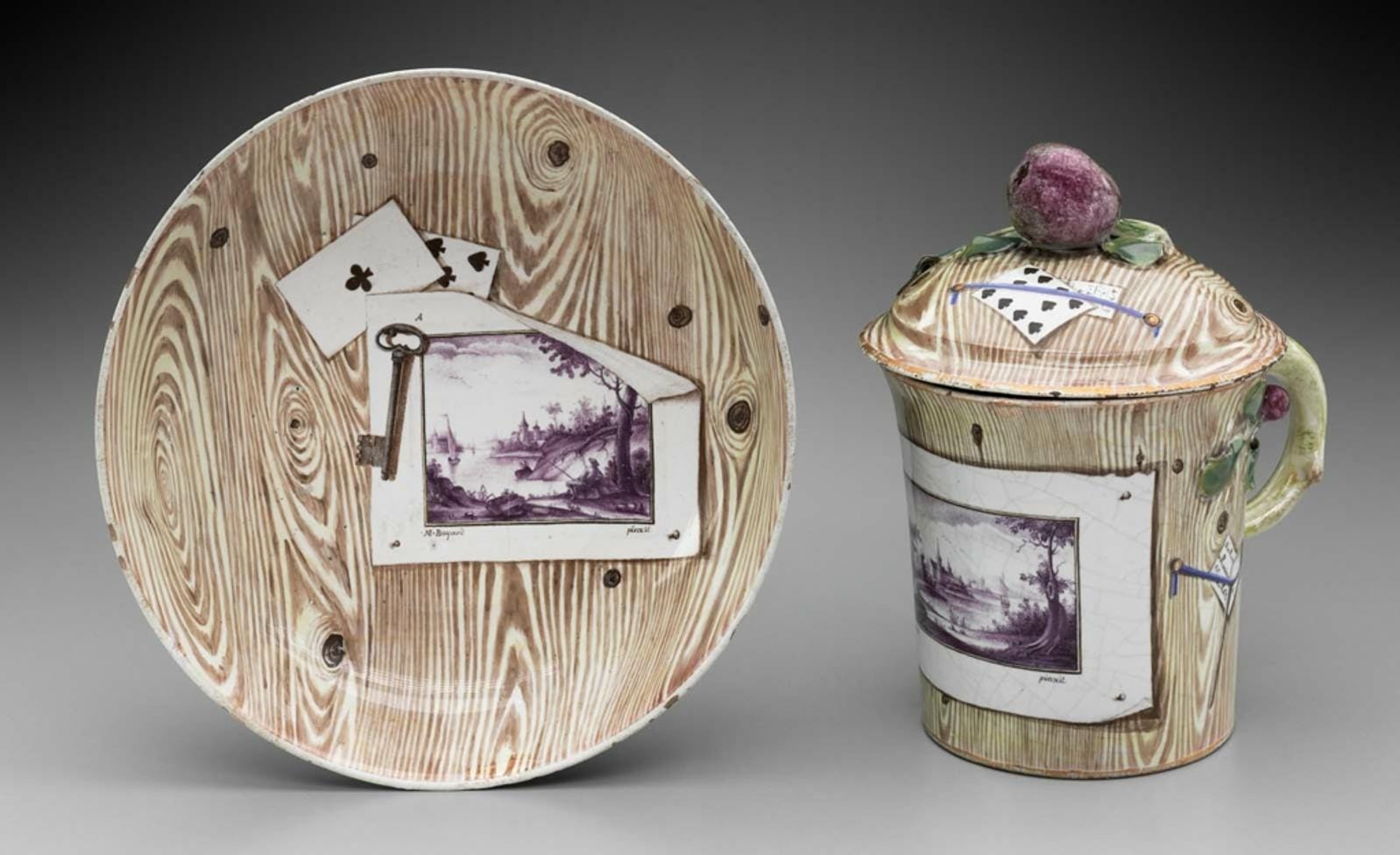
Unlike more traditional grain painting (as seen on historic faux bois ceramics like this cup and saucer), which often featured monochrome browns and tans, polychrome painting showcases a vibrant palette of bright colors. Unexpected combinations, such as pink, dark green, vivid blue, red, and black, appear in some antique examples. To achieve the look, vinegar painting (a mixture of pigment, sugar, and vinegar) was especially popular because the acid reaction produces distinctive bubbly or high-contrast textures when applied with specialized tools and mark-making devices. Today, these pieces are highly valued by collectors of Americana antiques.


These days, the effect is mainly achieved with gel medium and acrylic paint, as shown in this excellent YouTube video. What draws me in is the combination of techniques, the juxtaposition of massive craft — detailed, skilled furniture-making — finished with a loose, quick, almost expedient painting style. The tools and paint work in a way that you can’t be precious about the outcome. You achieve the look with just a few motions, like dancing.
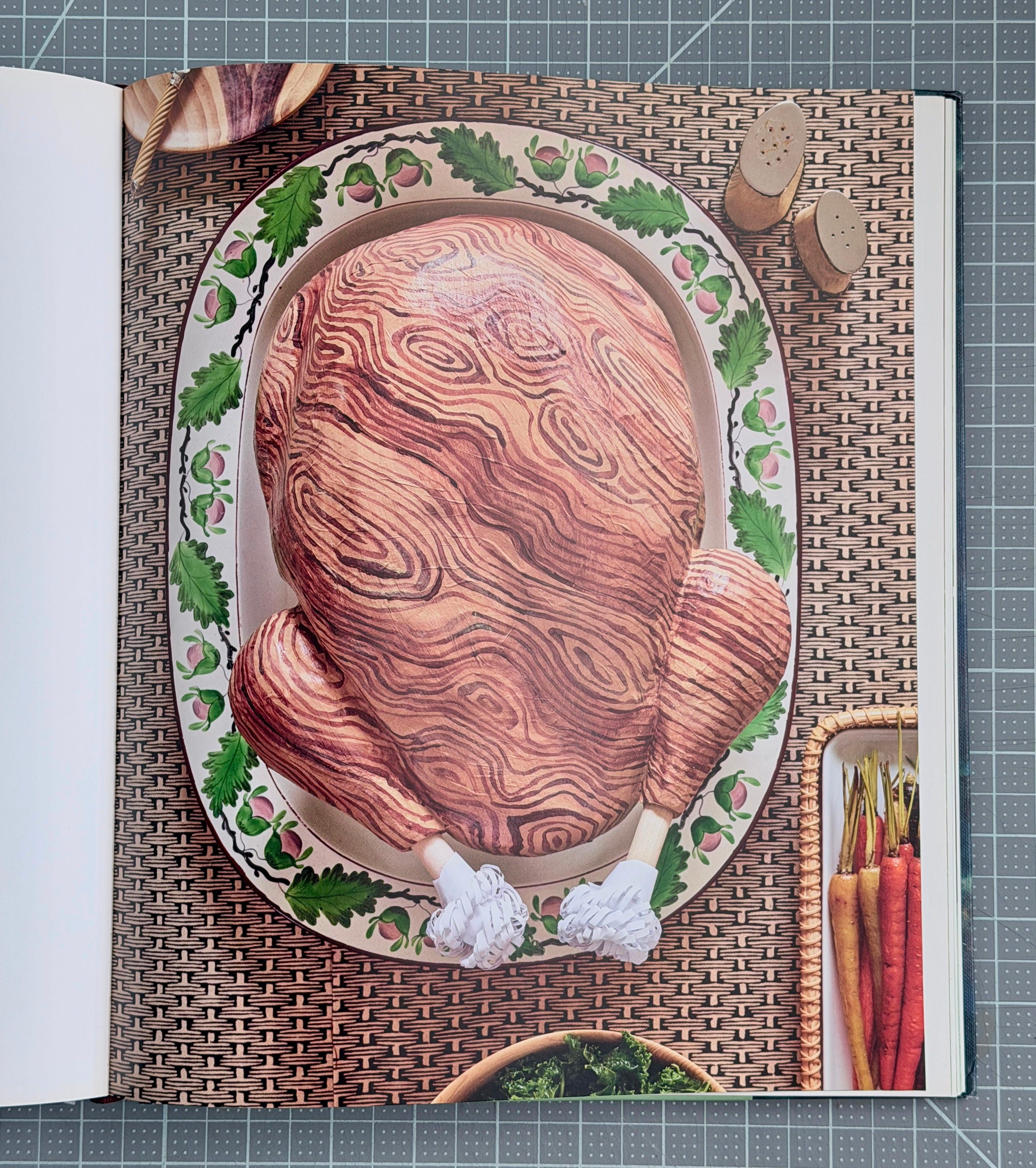
It reminds me of something that came up when I was helping David and Jane produce their book, which included a chapter on faux bois, one of my favorites. We borrowed exquisite porcelain pieces from Nymphenburg in Germany, among others. When Thanksgiving became the creative direction for the shoot, I ended up making a faux bois papier-mâché turkey. In the table setting, it was a little creative wink, but the book didn’t reveal that I made several turkey shapes with different paint styles before landing on that one. Others were bulkier and cartoonish, with the painting even more graphic. I remember feeling a bit unsure at the time, questioning which direction was best. Now that I've discovered yet another way to fake wood… it seems there are many ways to paint faux bois!
I’ve already been daydreaming about painting the two wood dressers in my bedroom. Perhaps it’s time to seriously consider polychrome grain-painting, circa 1790. If you love it too, I’ve started a Pinterest board to hoard more inspiration.
If you want to try faux bois yourself and need a surface, I recently added a new papier-mâché urn template to my Etsy shop… It’s the one I painted for my last post, and it’s a perfect canvas for experimenting with the technique. Except I got a bee in my bonnet and painted over mine! Why?! Ahhh! Maybe I was meant to paint it in a polychrome, vinegar-and-grain, Federal-style!


Thanks for reading and being curious about craft with me. XO, Corrie
You never fail to find and share such interesting things.