

Millefleurs, Unicorns, Leopards, and Fate
On discovering the tapestries I needed more of.

Have you ever come across a new word that made you think, “How did I go so long without knowing this?”? I just had that experience!
I’ve talked about it before, but I really enjoy exploring the Rijksmuseum’s online open collection. Recently, I found a tapestry fragment that immediately reminded me of one of my favorite pieces at the Met Cloisters. The fragment is titled “Millefleurs with a leopard and birds,” and the key term is millefleurs.
This French word translates to “thousand flowers” and is typically used to describe Renaissance tapestries featuring many small flowers and plants in the background. These designs are often layered without regard for depth or perspective. I’ve learned that many of the flowers were chosen for their symbolism; roses, violets, and irises each carried specific meanings in that world.
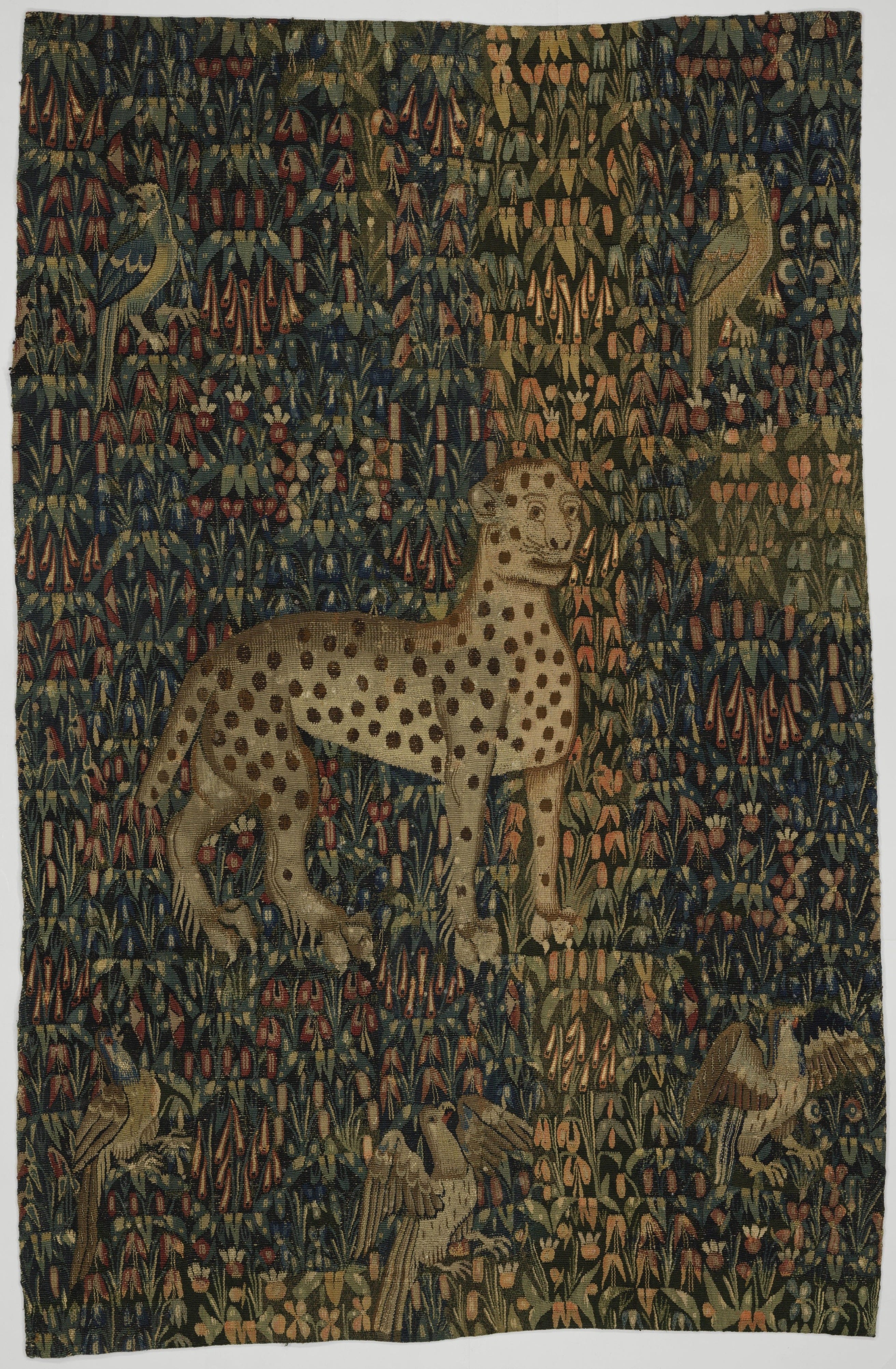
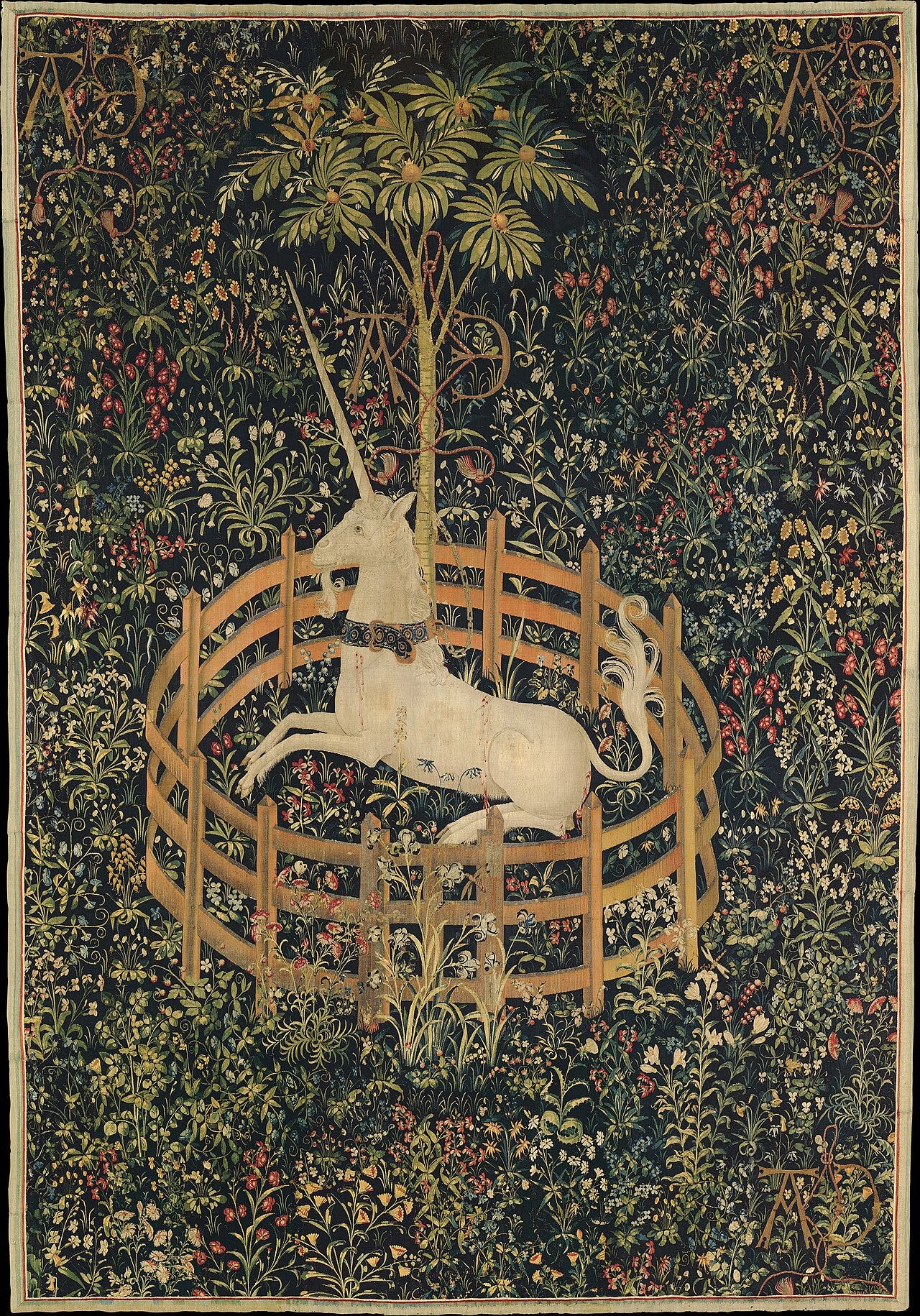
When I looked up millefleurs, I was pleasantly surprised because it perfectly describes what I cherish about the Unicorn Tapestries at The Met. It felt like a revelation… where has this word been all my life? Seeing that lone leopard in the lush, flower-filled landscape with its calm expression instantly captivated me. It took me back to the first time I saw “The Unicorn Rests in a Garden,” the most renowned piece in that series of seven tapestries. I'm clearly not alone in this; the unicorn at rest has become one of those images that has escaped the museum entirely, turning up on tote bags, notebooks, and coffee mugs. There's a reason for that.
That got me thinking. What other tapestries from this era have I been blind to that may evoke the same sentiment?
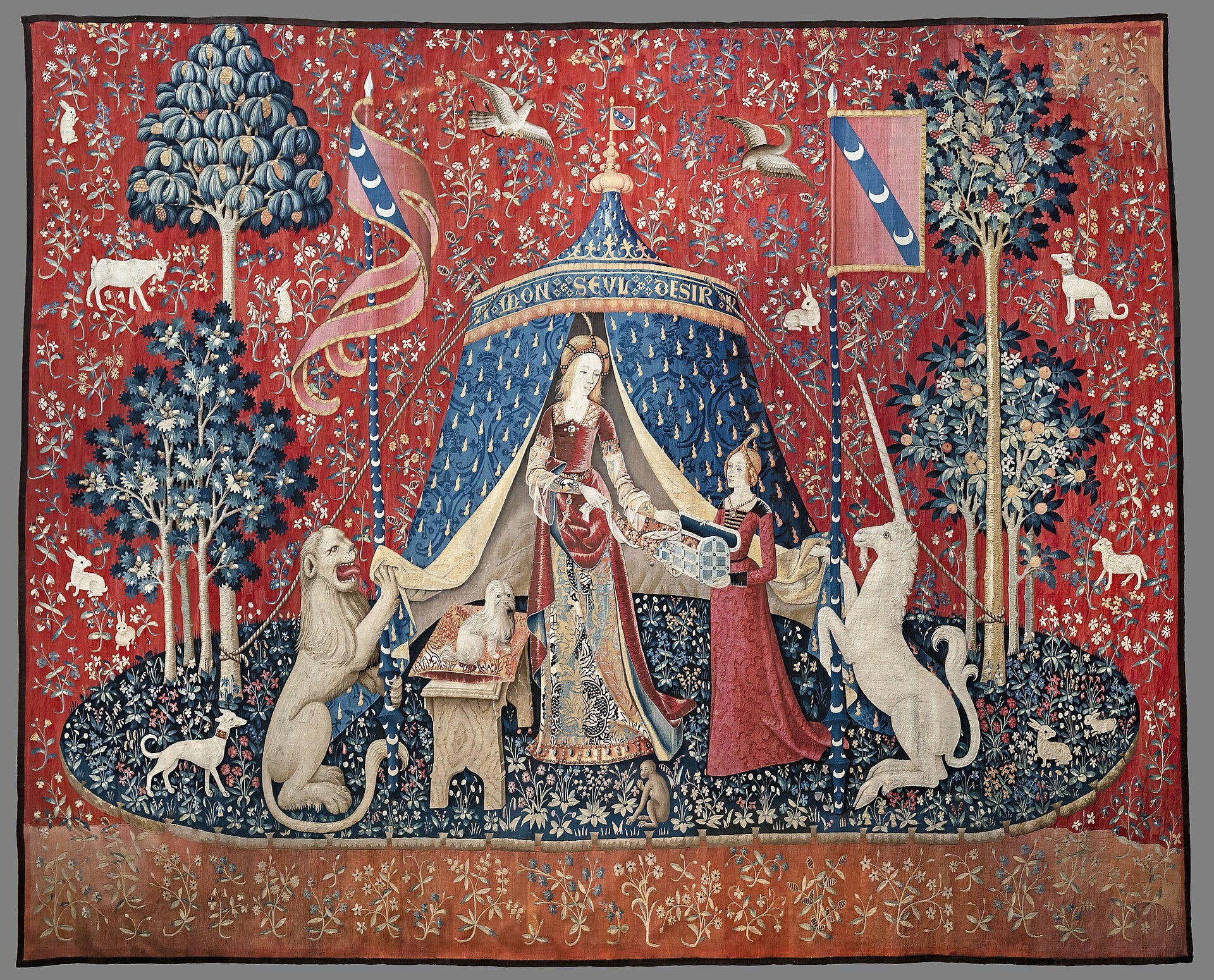
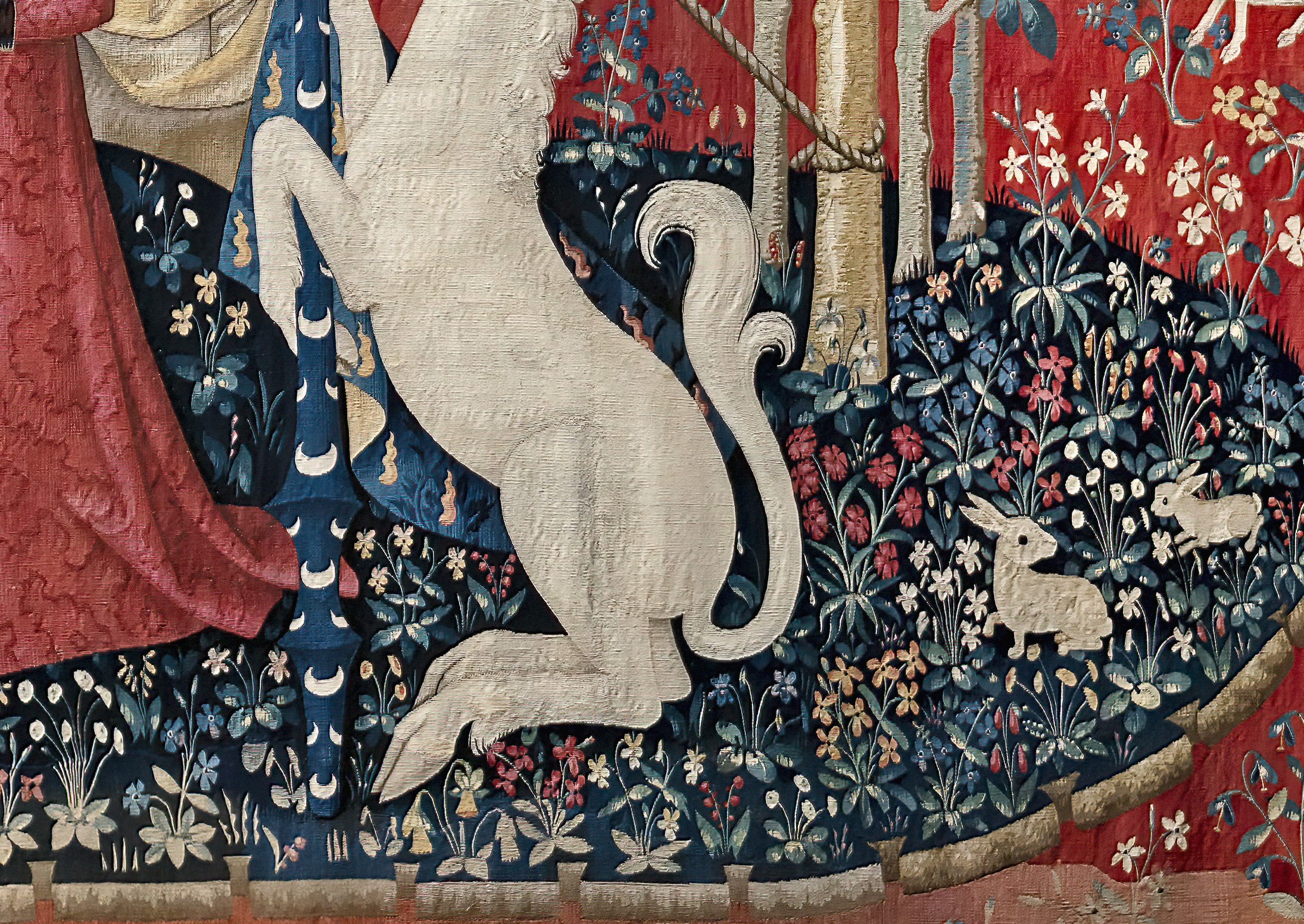
My dive took me to the most renowned, perhaps the "Lady and the Unicorn” Tapestries at Musée de Cluny in Paris. They form a series of six tapestries, five of which are commonly interpreted as depicting the five senses. The sixth displays the words "À mon seul désir" beautifully woven into the tent behind her. The phrase translates as "To my only desire" or "My desire alone." Its meaning is debated, with some seeing it as an expression of true love or spiritual devotion. Others believe that when the noblewoman returns her jewels to the chest, it shows her virtue, suggesting she is guided by her free will and intelligence. I’ll wait to see it in person before deciding my take, but I know I love the composition, the colors, and yes, the millefleurs, particularly the little island(?) they’re standing on. All six are worth exploring. The Wikipedia article has nice, large images you can zoom into.
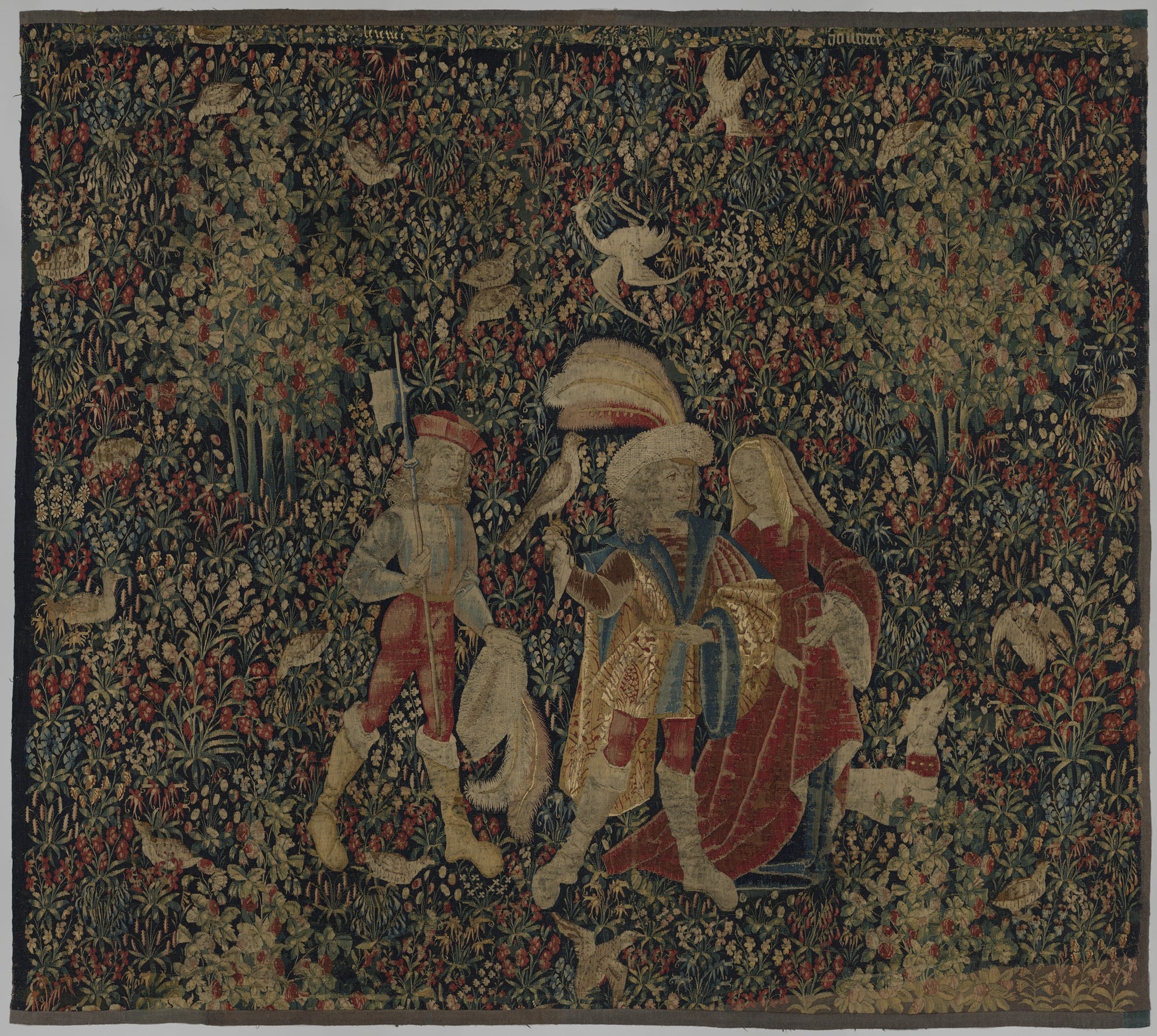
Another one you can see in person if you're in NYC, like me. At the Met’s 5th Ave location, in gallery 959, is “The Falcon Hunt.”
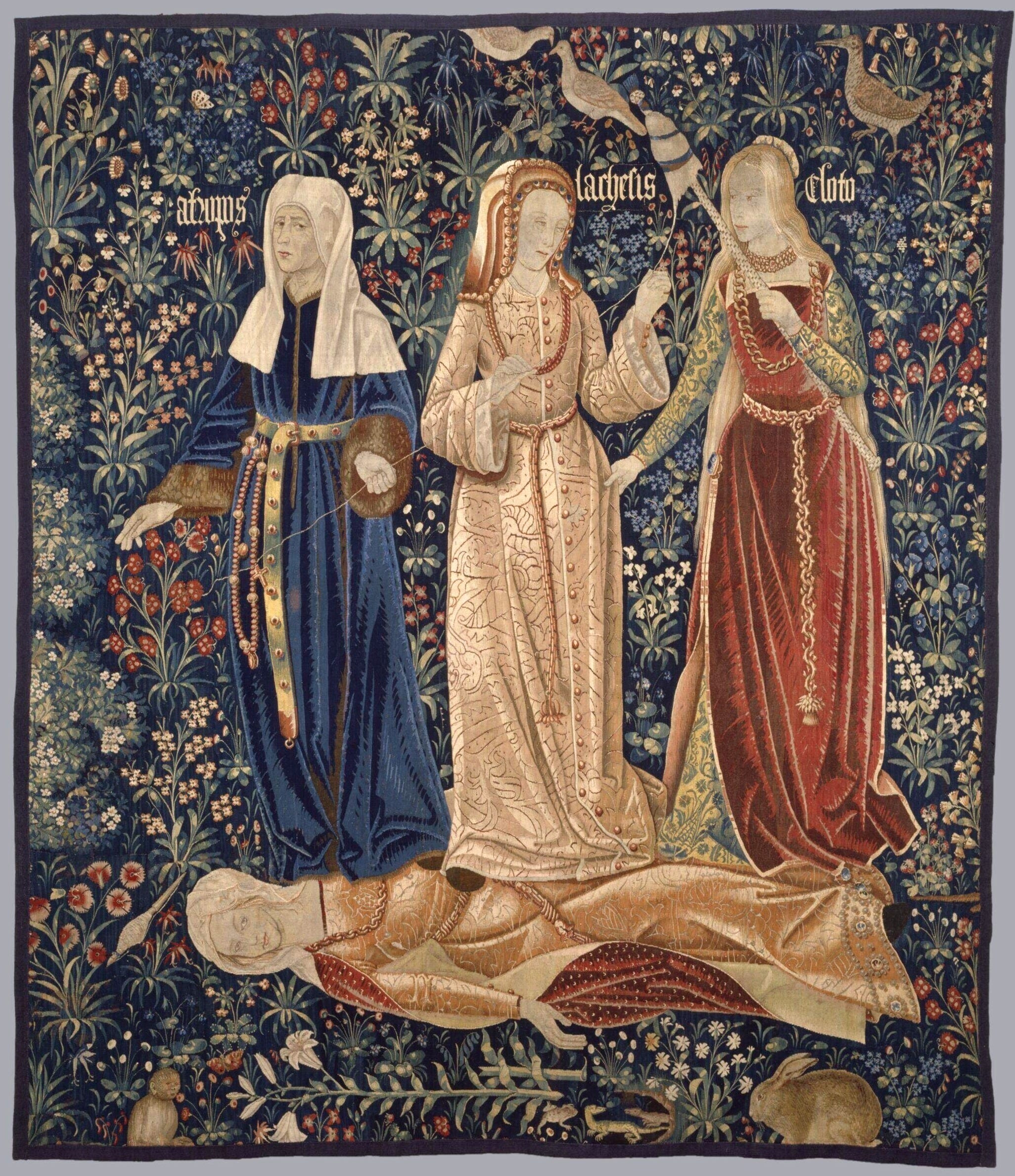
Similarly, "The Three Fates" at the V&A in London is stunning (and strange). Three figures stand at the center in a lush millefleurs field: Clotho, Lachesis, and Atropos, the mythological Fates who controlled the span of human life. What they're doing here is odd and a little dark; they represent Death, triumphing over the fallen body of Chastity. All of this comes from Petrarch's poem The Triumphs, in which each virtue defeats the last: Love, then Chastity, then Death, then Fame, then Time, then Eternity. Heavy subject matter for something so beautiful.
Once I started looking with intention, I found far more examples than I ever imagined. When I zero in on what I truly love about the unicorn at rest and the leopard fragment, it’s the peaceful calm within the storm. The solitary figure at the center looks so serene, even amid a floral cacophony. There’s no horizon, no vanishing point, no recession into distance. Every flower presses forward equally, impossible and abundant, more like a dream of a meadow than an actual one. The overall effect is simultaneously chaotic and completely still.
I’m drawn to the beauty of these pieces, even though many tapestries tell epic stories, religious tales, myths, or historical events. That’s fascinating too, but I can’t help wondering… Who made these? What inspired the lilies, rabbits, each leaf, and each stem? Did every weaver have a special skill? Did Elisabeth and Maria always weave the daisies? Although many of these were designed in France, they were most often woven in Brussels. At the time, they served to insulate drafty castles, promote propaganda, or showcase wealth. What really draws me in are the skillful hands behind these pieces, their distinctive style, the playful details that appear so effortless, and the sheer joy of creation that makes me want to get a loom!


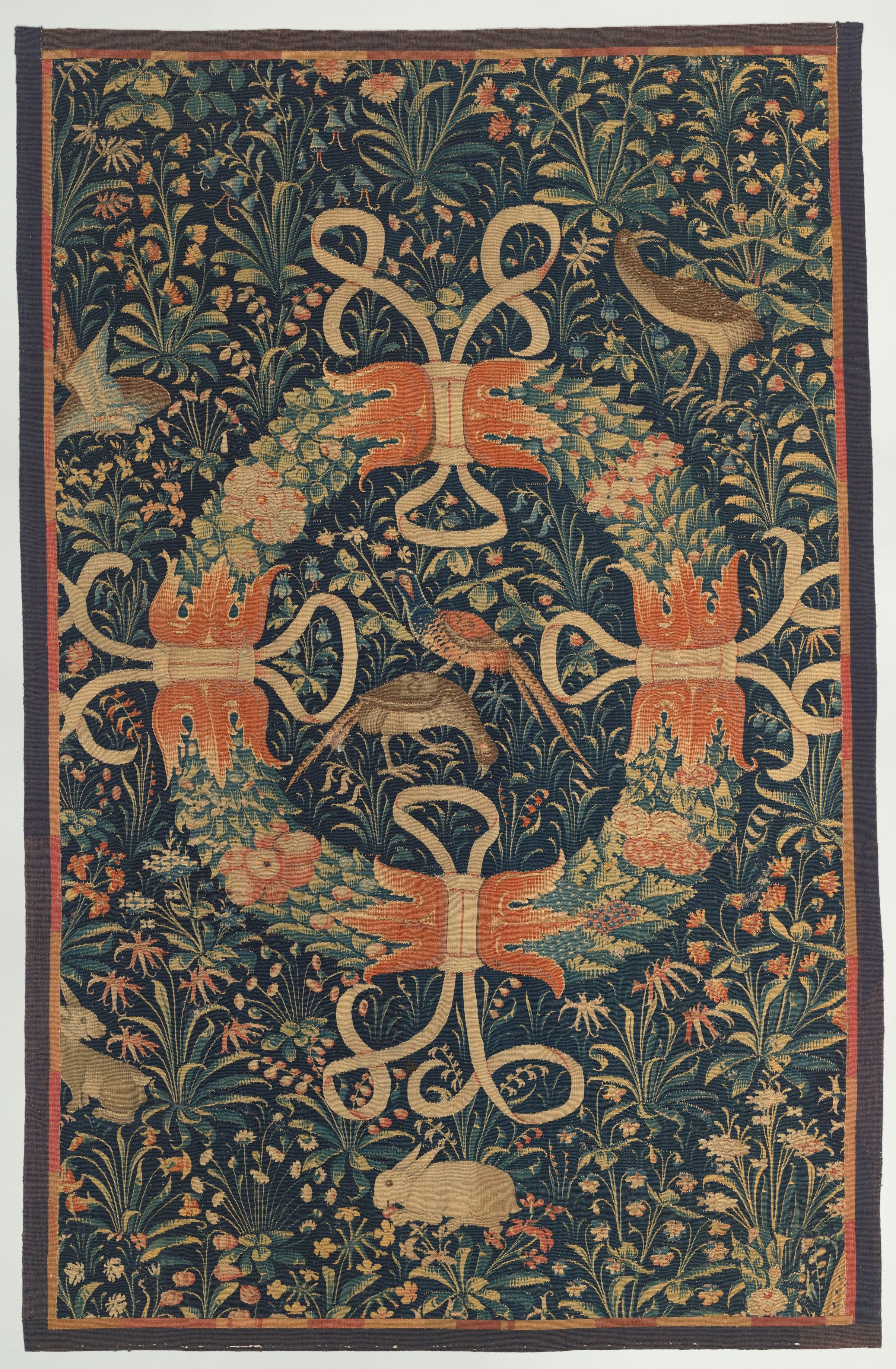
The piece at the Met, “Wreath on a Ground of Flowers, Birds, and Rabbits,” which isn't currently on display, has become one of my favorites among the new discoveries. This smaller tapestry measures 49 x 77 inches and features a wreath as its central motif; the non-figural element appears to emphasize the millefleur just as much. This one makes me want to make something!
If you'd like to explore further, I've started a Pinterest Board and will keep adding to it. The keen-eyed will remember that I briefly mentioned the Unicorn Tapestries in my articulating paper puppets post from last year; they've been a favorite for a long time, and finding the leopard, and then everything else, felt like a real gift. Have you seen any of these in person? Which is your favorite?
I had no idea that the Unicorn was a tapestry! As you said, it’s an image used everywhere, and I alway thought it was a painting. The skill it took to make these is astonishing
Living in Paris I’ve spent a few hours with the unicorn série. I think the millefleur is one of my favorite thing in ancient tapestry and I’m curious to see you work something around it !