

Hand-Painted, Well Played
Admiring the color logic of historic wooden game boards

If I could, I’d live in a museum storage room with just a set of keys, a cot, and a hot plate. Waking up surrounded by stacks of handmade objects sounds perfect to me. Sometimes I can almost smell the old varnish and cardboard. Lately, I’ve been especially interested in wooden game boards.


Hand-painted wooden game boards were everywhere from the 1830s to the 1930s, before mass-produced cardboard games took over. Families made their own fun, often with homemade boards or those crafted by local sign painters. Many were improvisational, using repurposed wood, household paint, and game pieces fashioned from whatever was at hand. When modern entertainment arrived, handmade boards faded away, only to be rediscovered much later as folk art.
There’s one board I can’t stop thinking about. Its colors are strikingly simple: ivory, school-bus yellow, and deep maroon. That’s all. There’s no shading or extra decoration; just bold, confident blocks of color, and it looks beautiful.
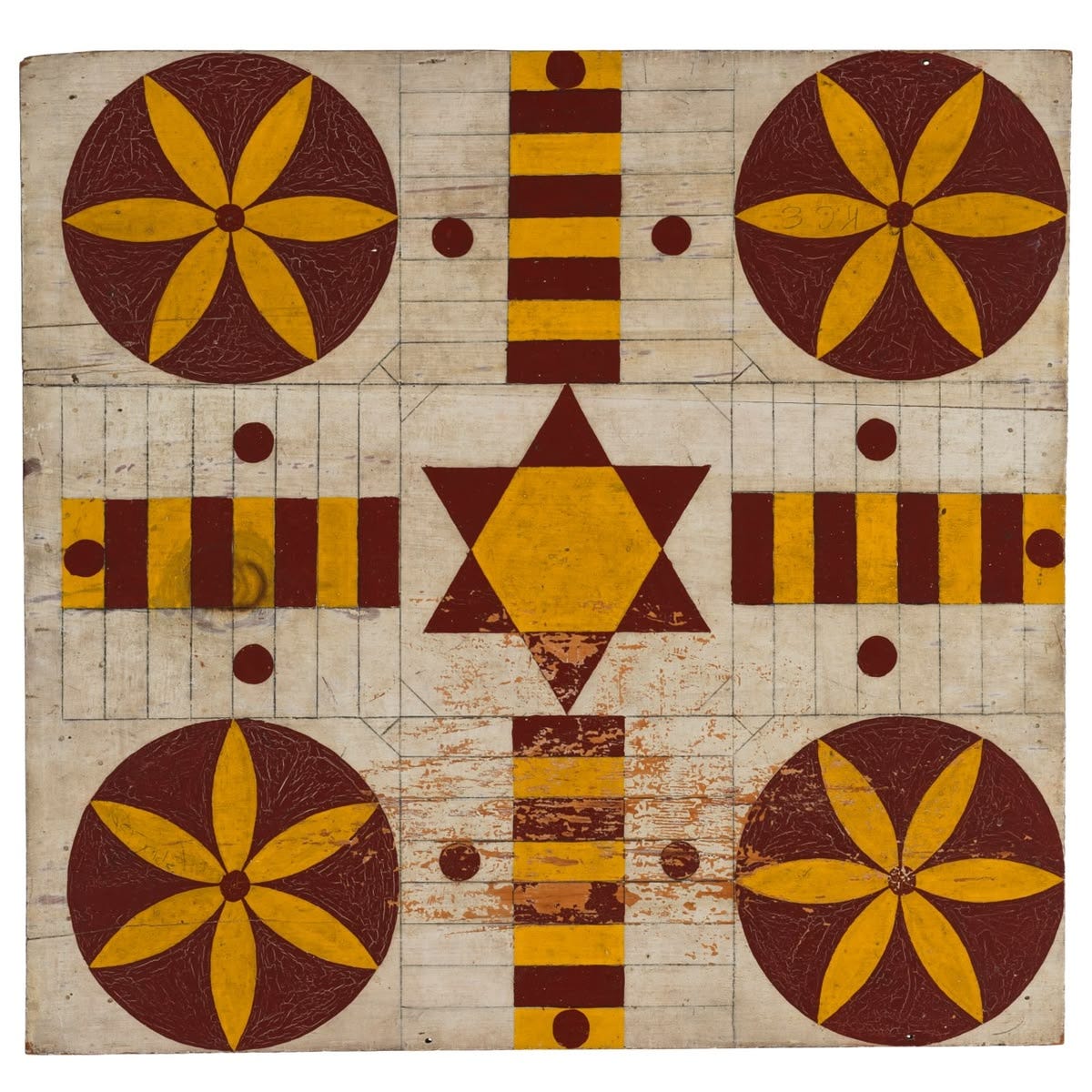
In the center, the paint has worn thin from use, so what began as three colors becomes four. The wood underneath, that slightly orangey tone of old plywood, joins the conversation. It’s a faint halo where hands must have hovered again and again, and the wood shows through not as damage but as collaboration.
This is part of the magic of the genre as a whole. The color decisions are bold, whether oxidized reds, slightly unusual greens, or yellows softened by time. Then, as people use the boards, the colors change even more. I love seeing worn corners and signs that people have actually played with them.
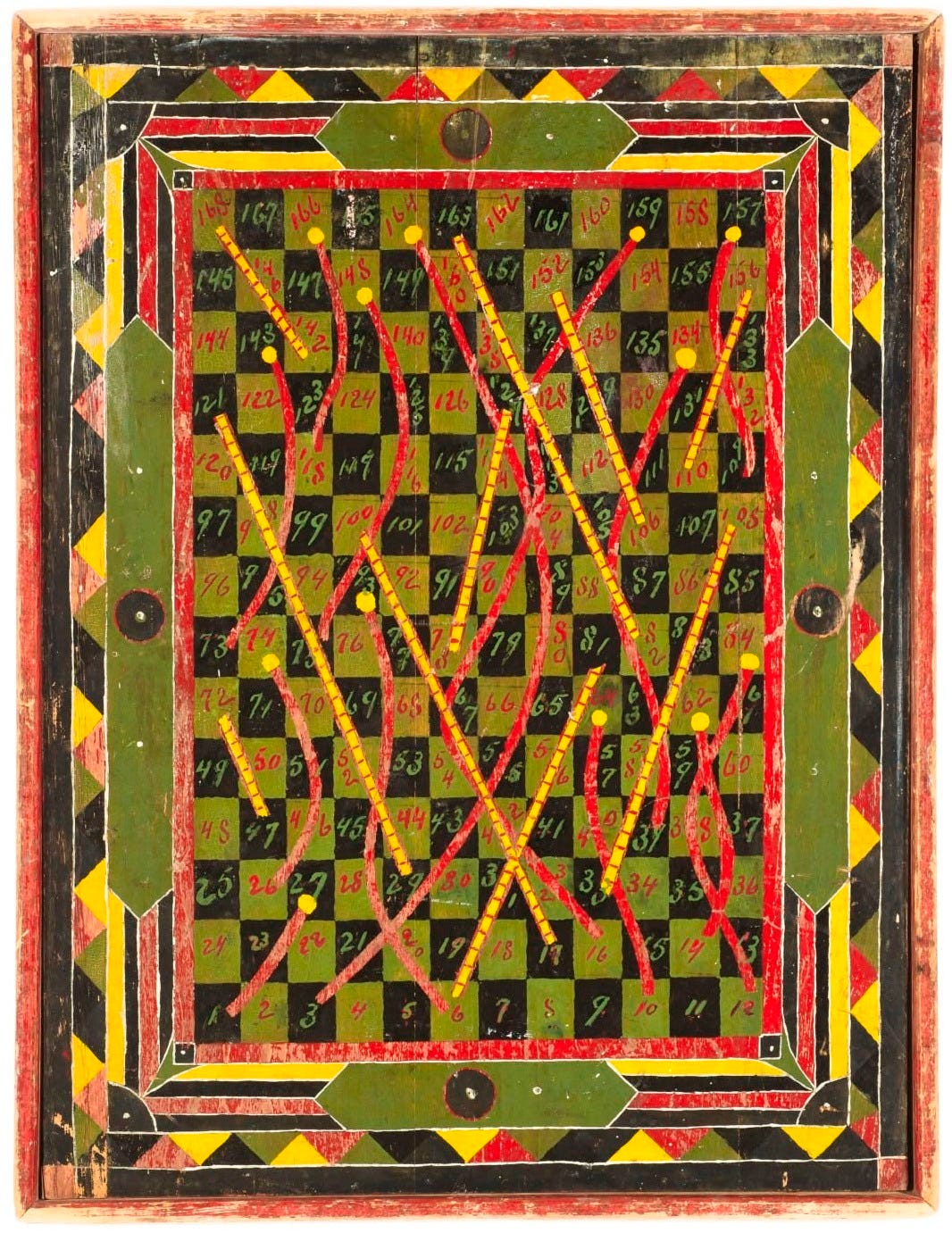
What do you notice first… the color, the pattern, or the signs of wear?
I’ve never played Parcheesi, and I don’t know the rules for half the boards I save. Still, I love the feeling they give me... the sense that something happened here, that people argued over plays, or that a child once dragged a piece too hard across the surface.
I admire the structure and the confident geometry of these boards, especially how someone mixed that maroon and decided it was just right. There are collectors who focus on these boards, and museums have even displayed them. I missed an exhibit at the American Folk Art Museum last year, and I’m still a bit annoyed about it; it felt like missing a train I meant to catch. Since then, I’ve saved many examples from that show to Pinterest, which is my way of keeping them close without actually living among them.
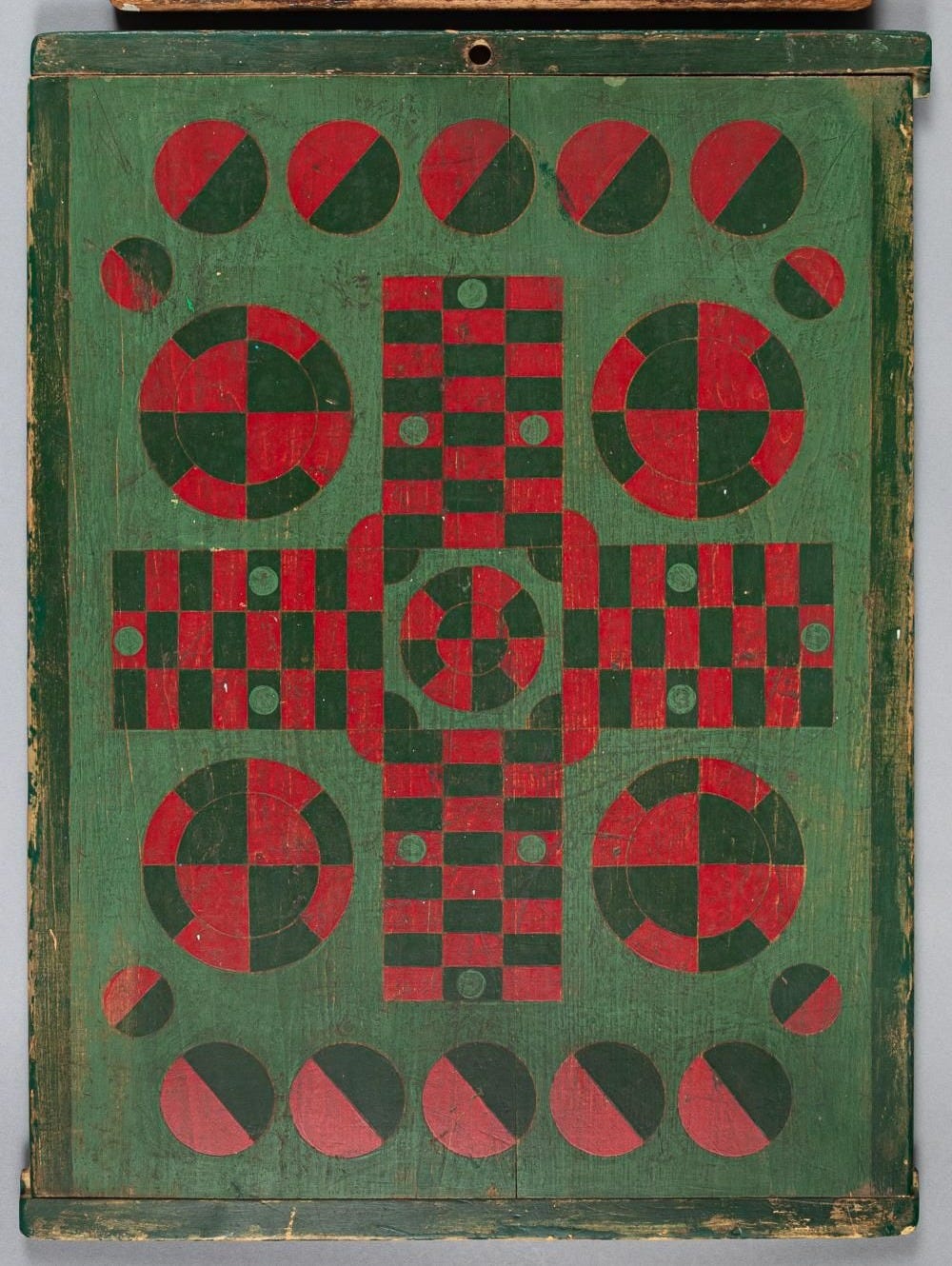
Woodshop Envy
When I was in college, I made my own wooden games, and I made them huge. I built a sliding puzzle about four feet across and jigsaw puzzles with pieces almost a foot wide. I glued plywood sheets together to make them heavy and broke a lot of jigsaw blades along the way. They turned out great, and I was proud of them.
If I’m honest, what I really wanted was to be in the woodshop. But I was enrolled in painting, so I convinced myself these constructions were “supports” for paintings; conceptually integrated, or so I claimed. Classic art school logic. But once the woodworking was finished and it was time to paint, I lost interest. It was the making that thrilled me: the physicality, the problem-solving, the heft and scale. Facing the blank surface felt like pressure. The paintings never quite lived up to the objects themselves. Most of them are effectively gone now, surviving only as a few slides in a box in my dad’s attic.
Maybe you’ve had that experience too, discovering that the process is far more exciting than the finished product, that the real joy is in the making, not the outcome.
Meanwhile, these old boards, painted in simple ways, feel complete just as they are. They weren’t meant to be art objects like mine were. Instead, they were made to invite people to gather and play together. I think they’re beautiful. Most were made by people whose names we’ll never know: farmers, cabinetmakers, parents, or anyone with some leftover paint and a free evening.
Color Stories
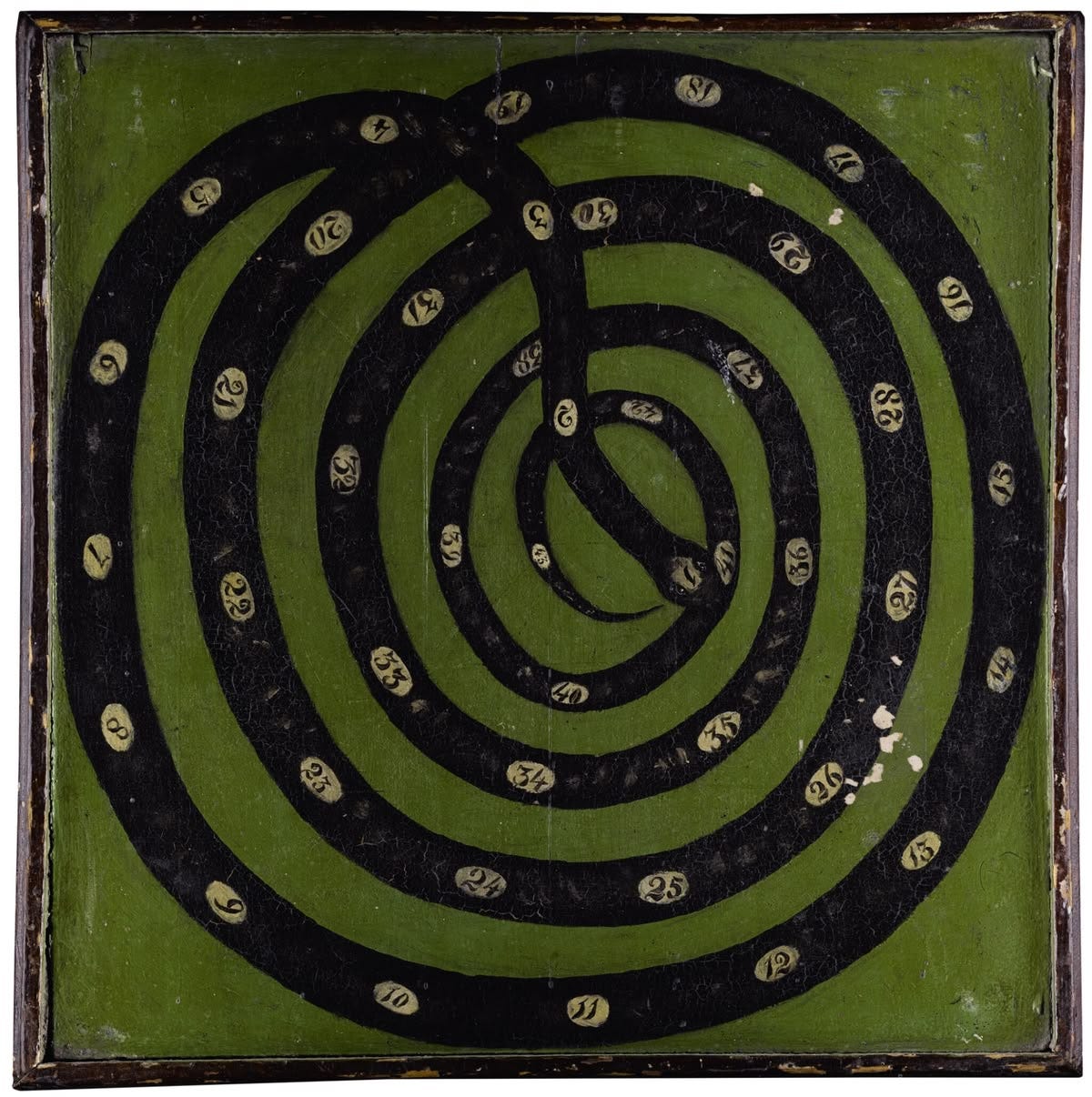
Instead of starting a collection or taking on another big woodshop project, I chose something smaller. I began making quick color studies, spending a few minutes at a time pulling three to five colors from a board and putting them side by side to see how they work together. These aren’t replicas or too serious, just a way to notice what makes the combinations work.
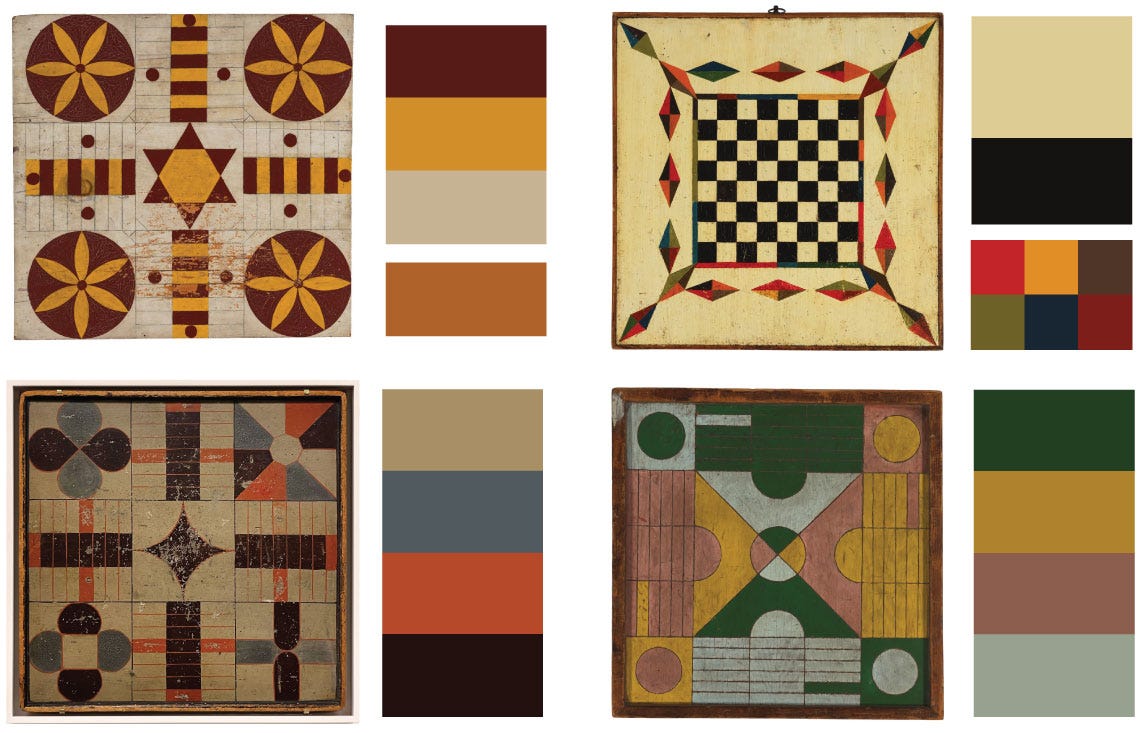
I’ve made a few of these studies digitally in Adobe, picking out palettes from four different boards. I’ve also created small swatch cards with paint and paint pens; quick, simple versions that aren’t meant to be precious. What interests me most is how useful these colors feel once they’re taken off the game board.
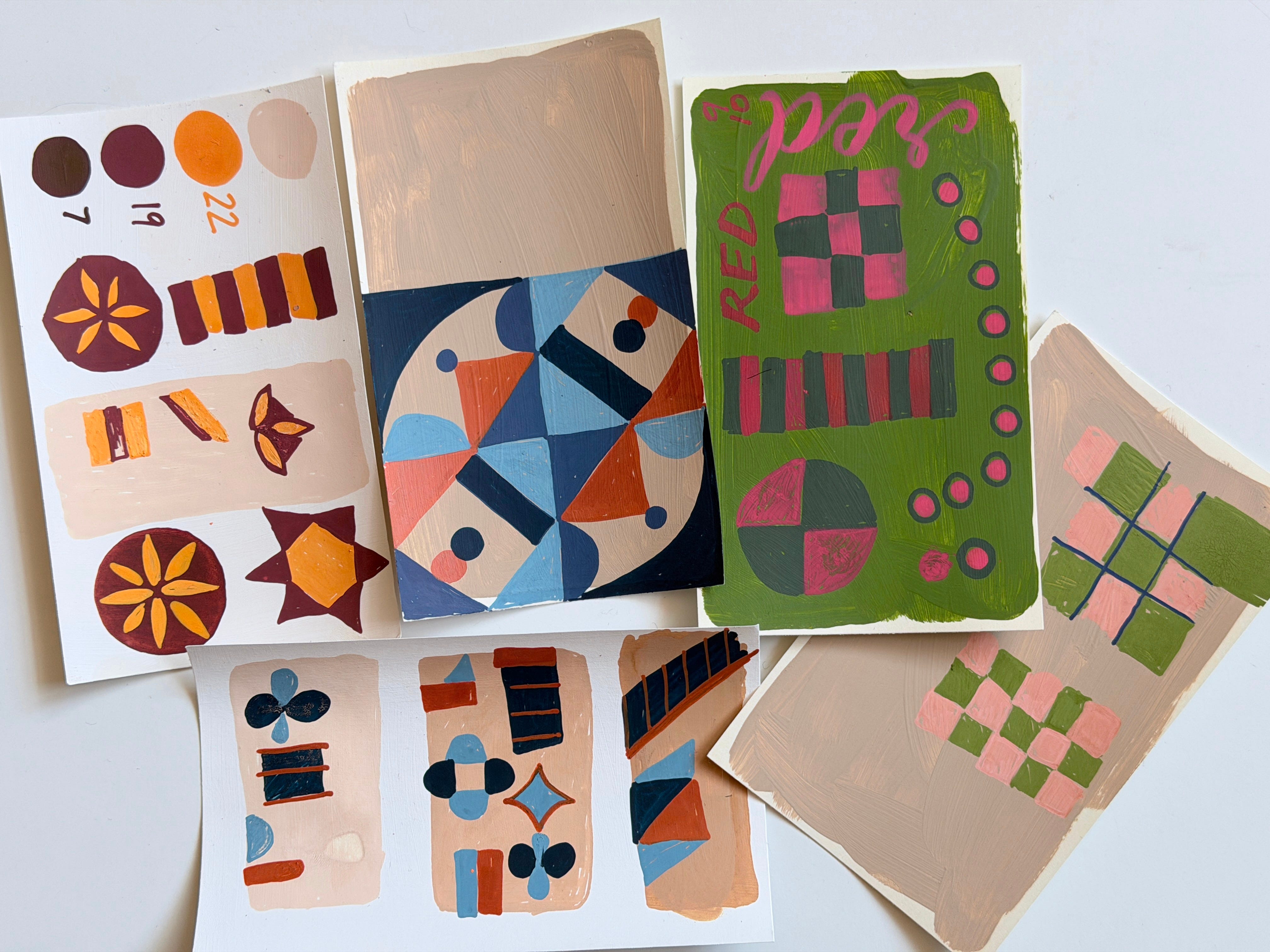
Maybe the lesson is not about craftsmanship at all but about conviction, about choosing three colors and meaning it. These combinations do not have to become game boards; they could become patterns, textiles, a room, or a background for something else entirely. There is something surprisingly assured about them, and if you told me these palettes were designed by professional colorists, I would believe you, yet they were crafted by makers in backyards with a ruler and a reason to gather and play.
If you like one of these color palettes, how would you use it?
Maybe it’s better this way. I don’t move into the storage room; instead, I visit, borrow a few ideas, and return to my own studio. There’s always another shelf to explore, another rabbit hole to go down, another maker from the past offering something worth carrying forward. What will you borrow next?
Thanks for this , it sent me down a different rabbit hole. I didn't know that Snakes and Ladders had evolved into Chutes and Ladders in the US, or that the game has had so many moral messages over its lifespan. Pleased to have played the morality free version as a child - with some very cute snakes - and yes it's the only one I would know how to play.
Lovely, and so similar to quilt patterns I wonder if they were made by women who also sewed?