

Frames, Vessels, and What Sticks
A meander through the Met and a new paper mâché project!

A friend said something to me on a previous visit that I’ve thought about many times since. When I asked what else she wanted to see, she said simply: “I am full.” I’d never heard it put so plainly, but we all know the feeling. There is only so much museum we can absorb in one outing. Usually, after a couple of hours, I find myself walking faster, skipping the text panels, making a beeline for what I came for. And when I leave, I’m left with just a few morsels, the things that actually stuck. There's also a part of my brain I can't seem to turn off… moving through a museum with two questions always at the forefront: how was this made, and could I make something like it?
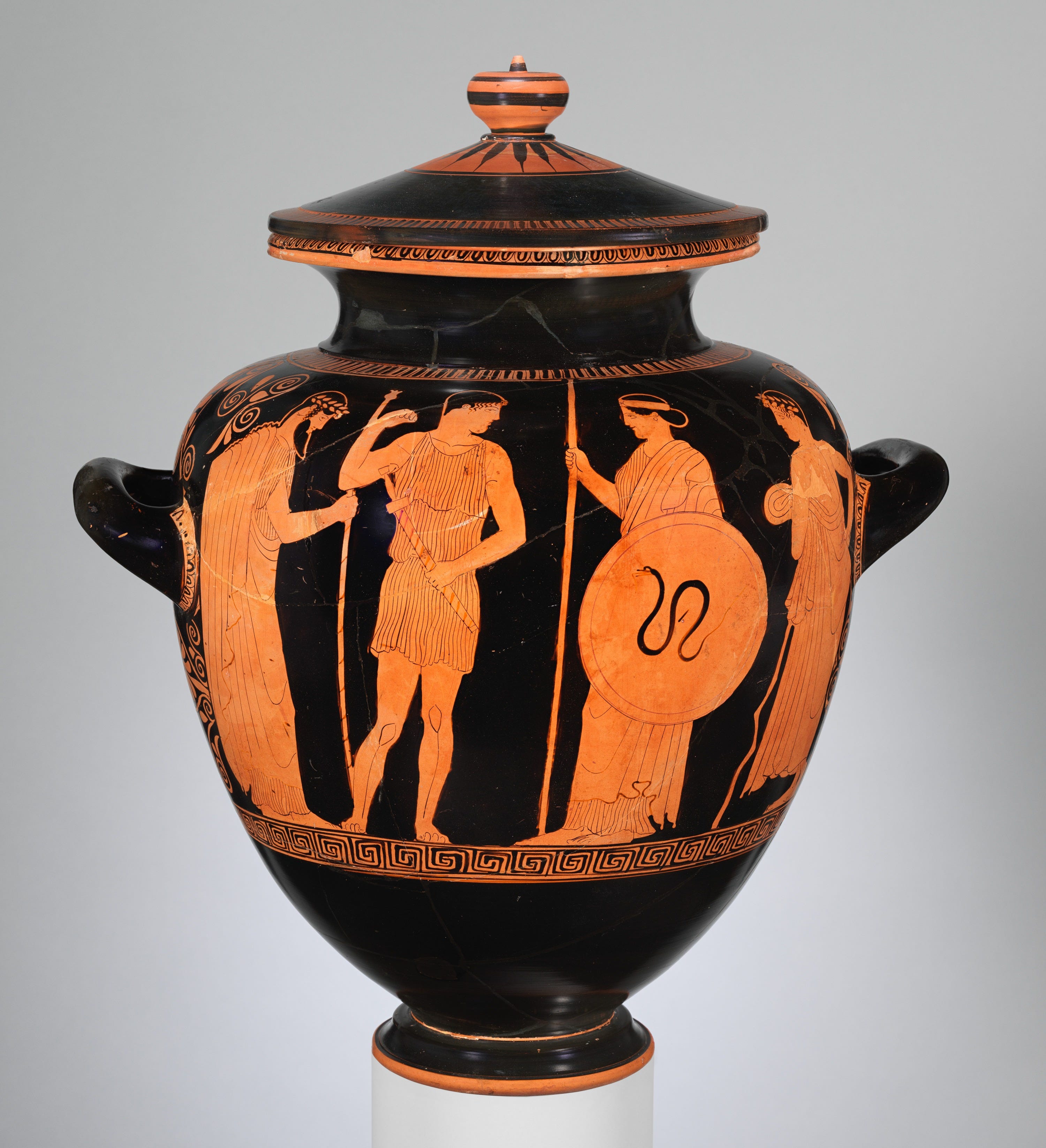
Last week, I finally made it to the Raphael show. I always enter through the membership entrance on the lower level, which leads directly into the Egyptian galleries. I can never walk through without stopping. So many stunners… urns and vessels of every proportion and silhouette. I was stopped by a stamnos with a lid. I’ve been wanting to design a papier-mâché vase with a lid for months, and there it was: the shape I was looking for.
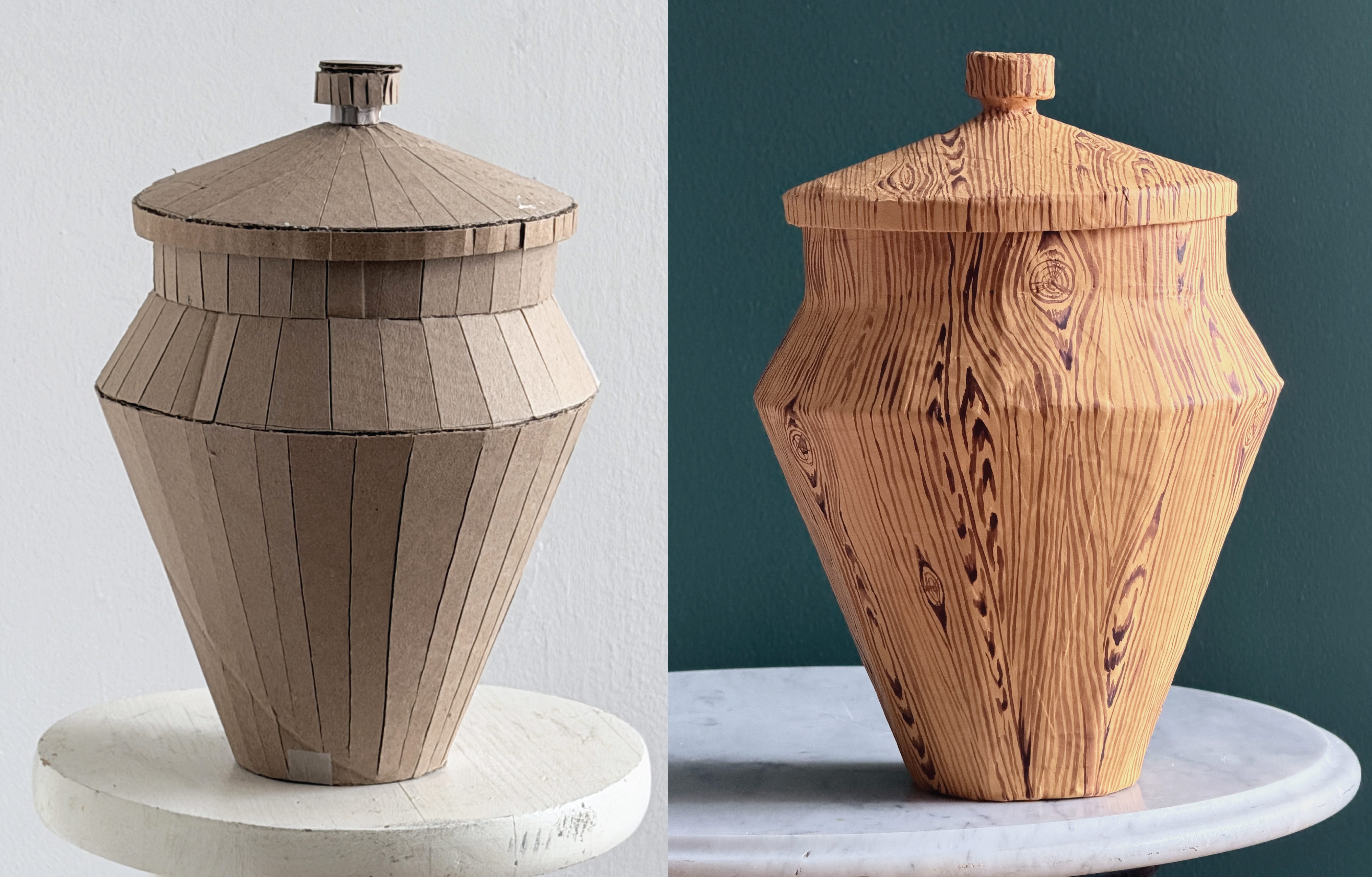
I pared the form way down, removed the handles, and made the urn more angular to simplify the cardboard construction. The lid is the most intricate part, with 7 pieces; the vase itself is just 4. It can absolutely be made without the lid if you want to keep things simple, but I love what the lid does for it. Lots of surface area to paint however you like. I went with a faux bois finish this time. (More on that in a future post, because fake wood painting is its own entire world, and I have thoughts.)
Then, eventually, I made it to Raphael.
The exhibition runs until June 28 (only four days remaining as I write), and it’s definitely worth visiting if possible. The space was busy, and I found myself sidestepping back and forth to view masterworks over the shoulders of other visitors.
Two paintings truly stayed with me. La Fornarina, his famously unconventional subject, looks straight back at you across five hundred years in a way that most of the Madonnas don't. (My favorite detail is her turban!) And then there's the Portrait of a Young Woman with a Unicorn, which has its own fascinating, layered history: beneath the unicorn is a dog, and the painting has been painted over and restored a few times over its 520 years.
However, my focus wasn’t solely on the paintings. I kept getting pulled toward the frames.
Some were the gilded, carved, heavily molded profiles you’d expect, but a few had something different: painted decorative details. I stood in front of those longer than anything else. They reminded me a bit of stage-show set pieces, with the maker’s touch still visible. Which I love because, more than the other techniques, I see them as something “maybe, maybe I can do.”
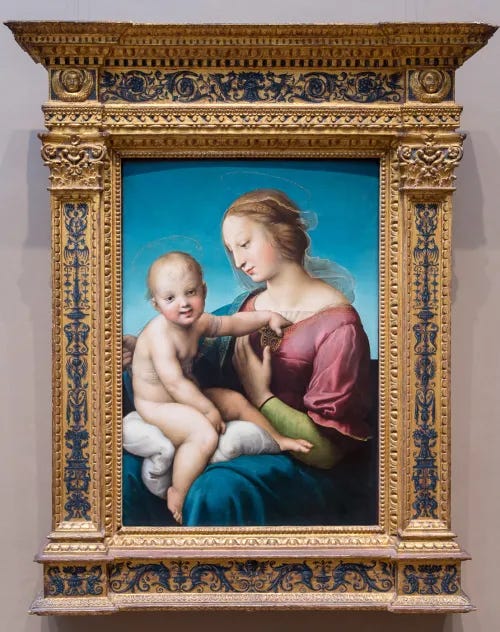


I later learned that some of the painted frames I'd admired were made relatively recently by an Italian framemaker named Ferruccio Vannoni, in styles meant to approximate the Renaissance, and that art historians have mixed feelings about this. Maybe not a surprise, but almost none of Raphael's paintings are in their original frames. Most have been reframed multiple times, by collectors, museums, and dealers, each era leaving its own mark. One of my favorites from the show was on the Niccolini-Cowper Madonna, reframed by a new owner who commissioned Vannoni to make something. Standing in front of it, not yet knowing any of that, I just thought it was beautiful. If you want the full story, along with the history of other frames on Raphael’s work, this article from The Frame Blog is extraordinary.
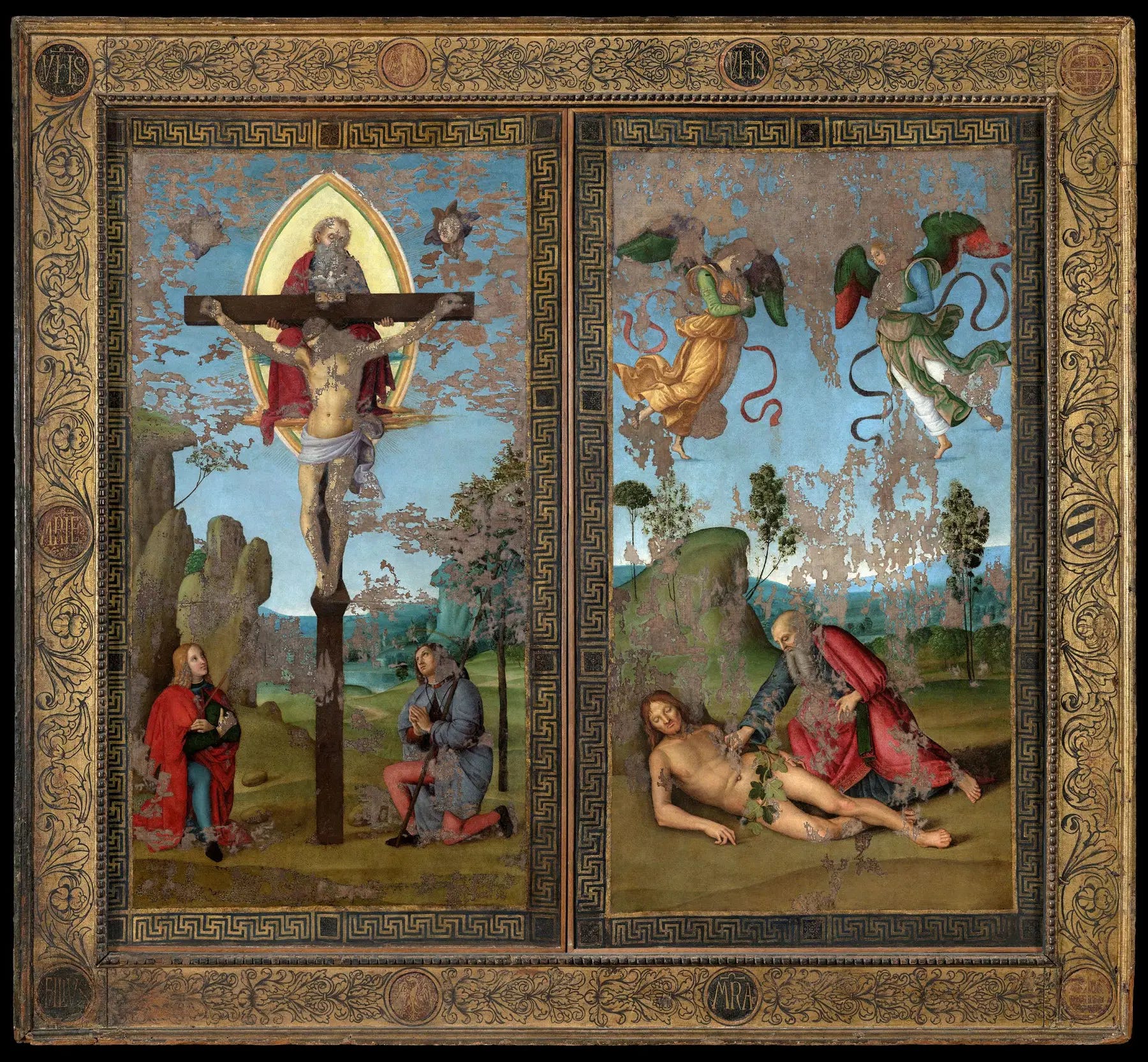


Another frame that caught my eye turned out to belong to one of the rarest works in the show. The Banner of the Trinity is a double-sided early Raphael work (originally carried on a pole in religious processions), and it has a genuinely fascinating recent history, including a restoration that revealed a hidden drawing beneath the surface using modern imaging techniques. At some point in the 17th century, the front and back were taken down from their pole, separated, and hung side by side. The wooden frame with its painted decorative details likely dates from that moment.
I stood in front of it thinking: a frame is never just a frame. It's a record of every person who decided this thing was worth preserving. It is their motivations, their tastes, and their beliefs about what is correct for a historical work that seem to shift every few decades. What will house these paintings in 2100? Will the frames be removed entirely? Will they eventually be hung on their own, admired as the art they are in and of themselves?
I left full. A new template in the shop, a faux bois technique to tell you about soon, and a lot of thoughts about frames I’m still sorting through.
I agree, I visited the V&A a few years ago, there was so much to see so I took a cup of tea - but was in awe of the beautiful tearoom! What lovely pictures. And thank you for giving me a pass on reading every museum card!
Yes, yes, I absolutely relate to that, “I am full” experience when viewing art! Your comment, “…a frame is never just a frame. It's a record of every person who decided this thing was worth preserving” is brilliant and totally reframed (sorry🙄) the way I think about them. The new vessel shape is beautiful and I look forward to learning about your faux bois technique. As always, your work delights and inspires me - thank you!